ServicesCarpet Installation
Carpet Installation in Kemah, Fitted to What's Under Your Floor
Before new carpet goes down, we look at why the old one failed: loose stretching, a crushed pad, slab moisture or pet stains that reached the concrete. Then we choose the pad, plan the seams and power-stretch the carpet so it stays flat and soft in your home.
Carpet That Lasts Starts With the Right Diagnosis
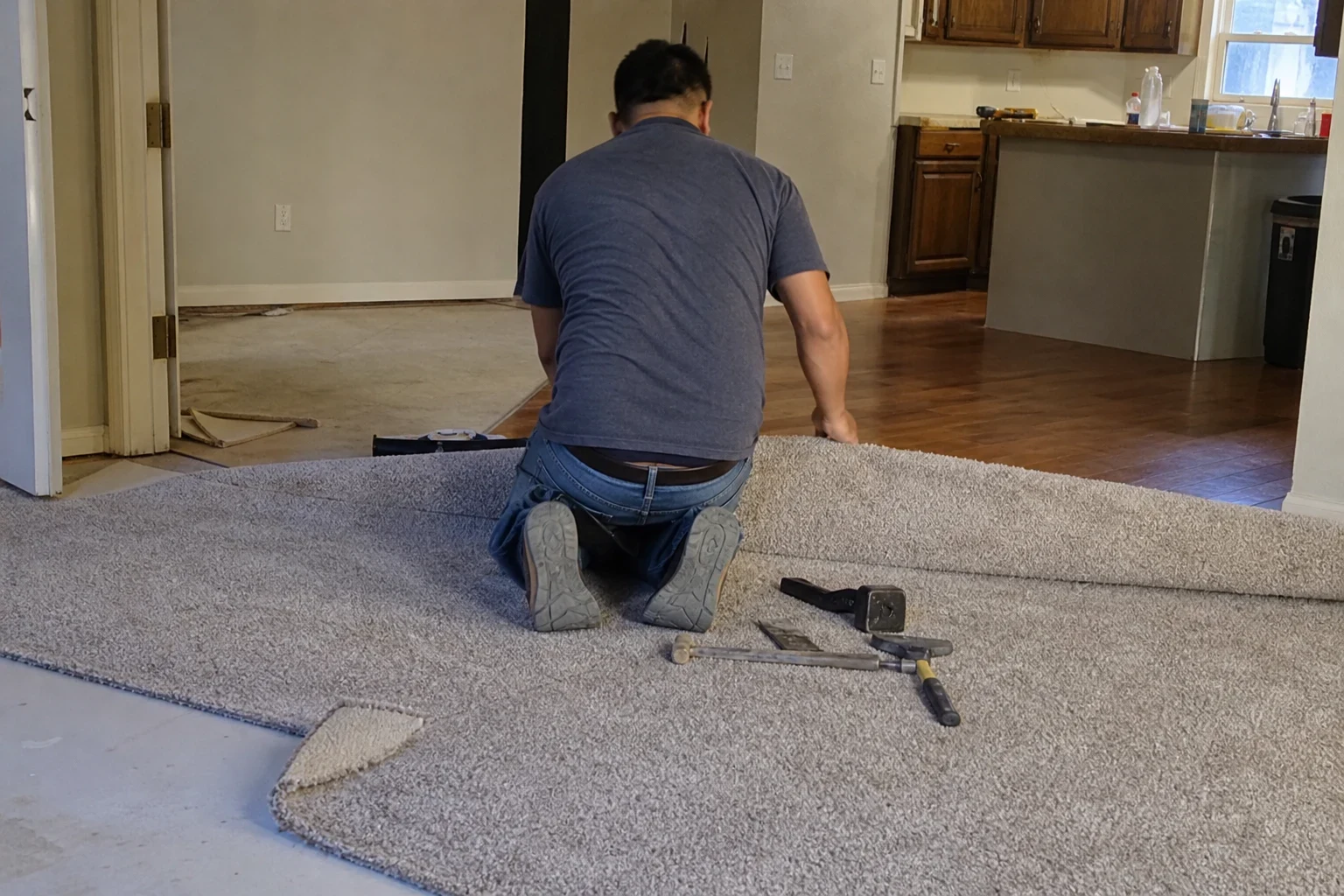
Most carpet complaints have a cause you can't see from the surface. Ripples usually mean the carpet was knee-kicked instead of power-stretched. Matted traffic lanes often point to a pad that was too thin or too soft. A musty smell that survives cleaning has usually soaked into the pad or the slab itself.
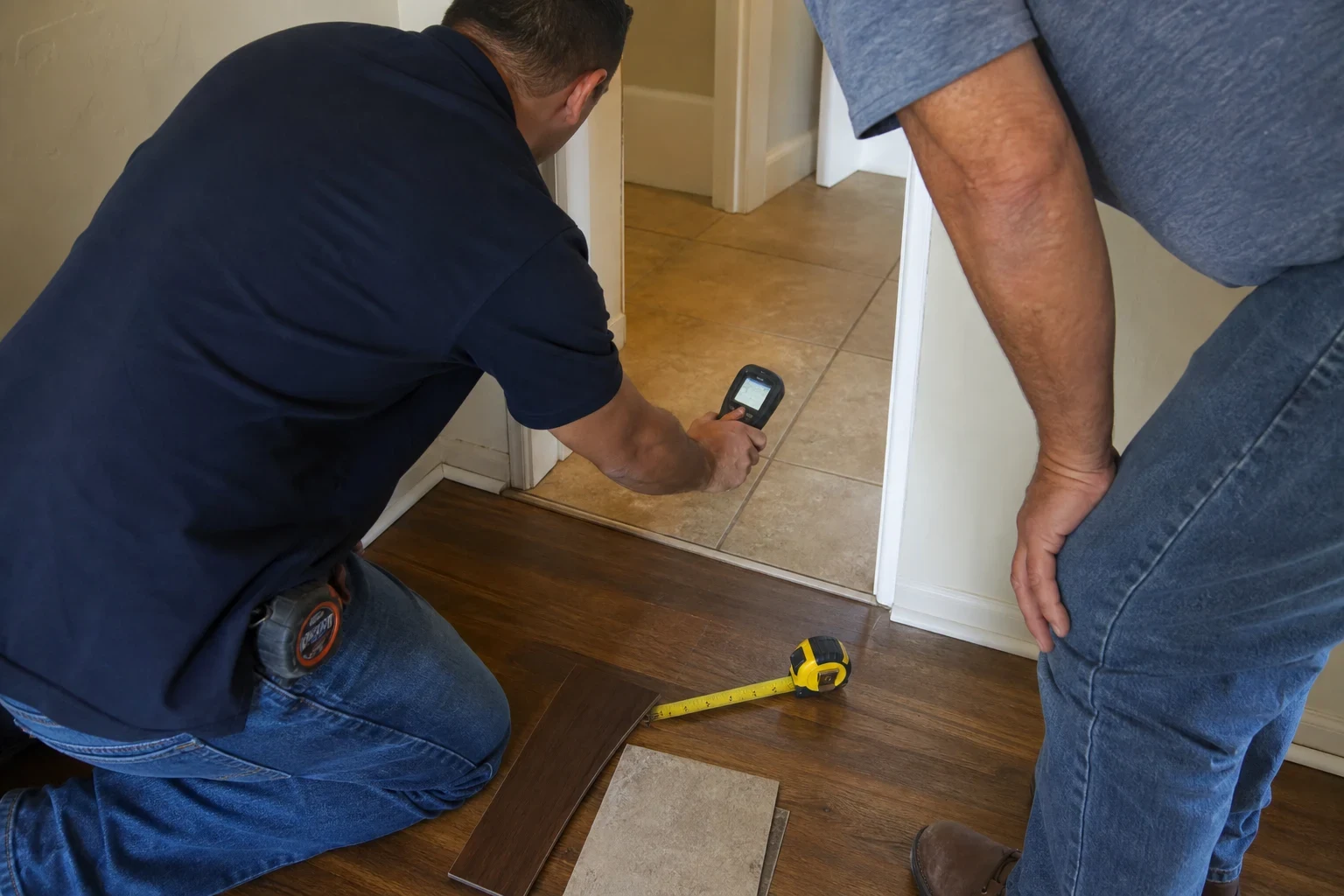
We start each carpet installation by pulling back a corner, checking the pad and tack strip, and reading the concrete for moisture. Many homes around here sit on slabs, and the Gulf Coast humidity means a damp slab can quietly shorten carpet life. Knowing that first lets us pick a pad, a carpet construction and a prep plan that suit the room, rather than repeating the old mistake with a nicer color.
What Our Carpet Installation Includes
- A look under the old carpet
- We check the pad, tack strip and subfloor before quoting, and we show you what we find. If a stain went through to the concrete, you'll see it.
- Removal and haul-away
- We take up the old carpet, pad and staples, and remove them from your home so you aren't left with a pile in the garage.
- Slab and subfloor prep
- Pet stains on concrete get sealed, high spots get ground and low spots get patched. Worn or rusted tack strip is replaced so the new carpet has a solid edge to grip.
- Pad matched to the room
- Bedrooms, living areas and hallways take different wear. We recommend a pad density and thickness that supports the carpet you chose, including moisture-barrier pad where it makes sense.
- Planned seams and power stretching
- We lay out seams away from doorways and light from windows where we can, then power-stretch wall to wall so the carpet stays tight.
- Clean transitions
- Edges meeting tile, vinyl or hardwood get proper transition strips, and doors are checked to swing freely over the new height.
Signs It's Time for New Carpet
Ripples that come back
If ripples return after a re-stretch, the backing may have broken down or the pad has failed. New carpet laid over the same problem will ripple too.
Odor that cleaning won't lift
Smells that return after steam cleaning usually live in the pad or the slab. Replacing the carpet and sealing the concrete is often the only lasting fix.
Worn paths and flattened pile
Gray lanes down the hall and crushed spots in front of the sofa mean the fibers and pad have given out.
Dampness or dark spots near walls
Discoloration along exterior walls or a damp feel underfoot can signal moisture. We check that before anything new goes down.
Seams you can see or feel
Peaking or separating seams point to poor seaming or a weak pad underneath.
What Shapes the Cost of New Carpet
Carpet pricing depends on more than the price tag on a sample. What we find under the old carpet often moves the number as much as the carpet itself. We explain each line so you can see where the cost comes from.
Carpet and pad choice
Fiber, pile height and density set the carpet cost. A denser pad or one with a moisture barrier adds to it, and usually adds years.
Room size and layout
Rooms wider than a standard roll need seams, and odd shapes or closets create more waste. Pattern matching adds material too.
Slab condition
Sealing pet stains, grinding high spots or patching cracks takes time and materials that a clean, level slab won't need.
Removal and furniture
Tearing out old carpet and moving heavy pieces like pianos or full bookcases affect labor.
Stairs and transitions
Steps are cut and fitted one by one, so they are priced separately. Our stair flooring page covers that work in more detail.
How Your Carpet Installation Day Runs
- 1
Measure and inspect
We measure each room, check pile direction and seam placement, and lift a corner to read the pad and slab. You get a clear written estimate based on what we found.
- 2
Prepare the rooms
On install day we ask that small items and breakables be cleared. We move standard furniture as needed and protect walls and door frames as we work.
- 3
Tear out and prep
Old carpet and pad come up, staples are pulled, the slab is cleaned and treated where needed, and tack strip is set or replaced.
- 4
Pad, seam and stretch
The pad goes down, seams are joined with heat tape, and the carpet is power-stretched and trimmed tight to the baseboards.
- 5
Walk-through and cleanup
We vacuum, check every transition and door, and walk the rooms with you before we leave.
Carpet Installation Questions
Can you put new carpet over my old pad?
We don't recommend it. An old pad has already compressed and may hold odor or moisture, and new carpet wears faster over it. We replace the pad as part of the installation.
How long does a typical carpet installation take?
Most homes with a few bedrooms and a living area are done in a day. Extra slab prep or a lot of stairs can stretch it longer, and we'll tell you that when we measure.
Is carpet a good idea on a slab in this humid climate?
It can be, as long as the slab is checked first. If we find moisture, we'll recommend a barrier pad or suggest a hard surface like luxury vinyl plank for that room instead.
My dog had accidents on the old carpet. Will the smell come back?
It can if the urine reached the concrete. We locate those spots once the old carpet is up, clean them and seal them before the new pad goes down.
Should I choose carpet or carpet tile?
Wall-to-wall carpet feels softer and has fewer visible seams, which suits bedrooms and living rooms. Carpet tile lets you swap a single damaged square, which some families prefer for playrooms or game rooms.
Ready for Carpet That Stays Flat and Fresh?
Tell us about the rooms and what's been going wrong with the old carpet. We'll set a time to measure, look underneath and explain what the new floor needs.