ServicesHardwood Flooring
Hardwood Flooring in Kemah
We install solid and engineered hardwood in your home after measuring what is underneath it: slab moisture, flatness and the condition of the old floor. Knowing those facts first is how a wood floor goes down once and stays flat, tight and quiet for years.
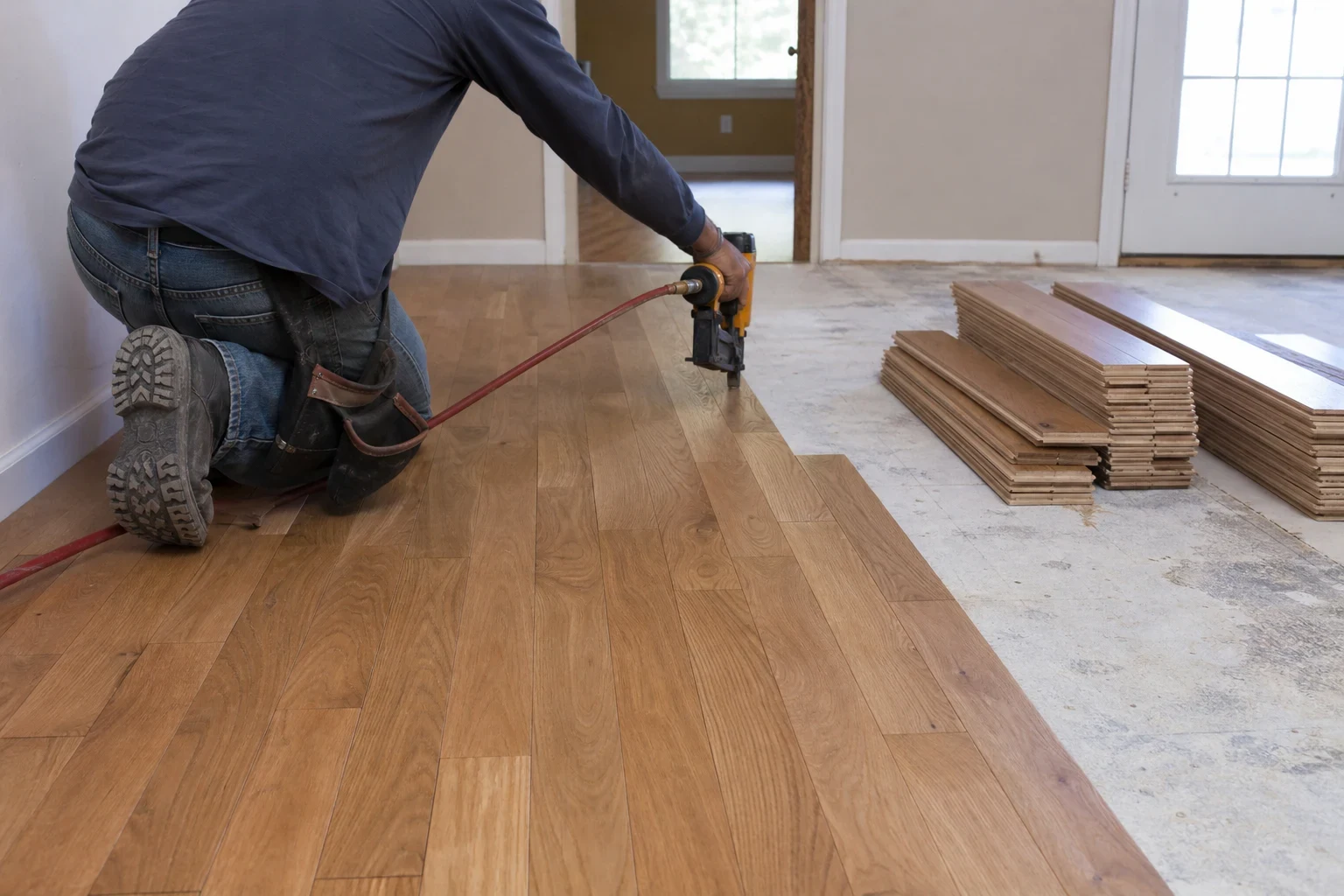
Wood Floors Start With What Is Under Them
Hardwood is a natural material. It takes on moisture and gives it back, swelling a little in damp months and shrinking in dry ones. Most hardwood failures we see, such as cupped boards, open gaps or a floor that lifts at the edges, trace back to moisture or an uneven subfloor rather than to the wood itself.
So before we recommend a species or a plank width, we look at your subfloor. On a concrete slab we take moisture readings and check flatness with a straightedge. On a wood subfloor we look for soft spots, loose sheathing and squeaks. That tells us whether solid or engineered hardwood suits the room, how it should be fastened and what preparation it needs.
Gulf Coast humidity makes this step matter more than it might elsewhere. A floor chosen and installed for the conditions it will actually live in is one you can simply enjoy.
What Our Hardwood Installation Includes
Subfloor moisture and flatness testing
We meter the slab or wood subfloor and mark high and low spots before any product is ordered. You see the readings and what they mean for your floor.
Solid or engineered, chosen for the room
Solid hardwood suits wood subfloors on raised framing. Engineered hardwood, with its stable layered core, is usually the better match for a slab. We explain which fits your home and why.
Removal of the old flooring
We take up carpet, tile, vinyl or worn wood and haul it away, then clean the subfloor down to a surface the new floor can bond to.
Leveling and moisture protection
Low spots are filled, high spots ground down, and the correct vapor retarder or moisture-rated adhesive goes in where the readings call for it.
Acclimation checked with a meter
The wood rests in your home until its moisture content is close to the subfloor's. We confirm that with readings instead of counting days.
Trim, transitions and cleanup
We fit baseboard or quarter round, set thresholds where the hardwood meets tile or carpet, and leave the rooms swept and ready for furniture.
Signs It May Be Time for New Hardwood
- Boards cupping or crowning
- Edges rising above the centers, or the reverse, point to moisture moving through the floor. We find the source before laying anything new, or the same thing happens again.
- Gaps that never close
- Small seasonal gaps are normal. Wide gaps that stay open all year often mean the wood was installed too wet or the fastening has failed.
- Hollow spots and squeaks
- A drummy sound underfoot on a slab usually means the adhesive has let go. Squeaks on a wood subfloor often come from loose sheathing that needs fastening before new boards go down.
- Water damage that spread
- After a leak, wood can stain, swell and soften well beyond the wet spot. We check how far the moisture traveled so the new floor goes over dry, sound material.
- Worn carpet or dated tile you are ready to replace
- Plenty of people simply want the warmth of real wood. That is a good reason too, and the subfloor check still comes first.
How a Hardwood Job Runs
- 1
A phone conversation
You tell us about the rooms, the current floor and any trouble you have noticed. We ask a few questions and set a time to see the space.
- 2
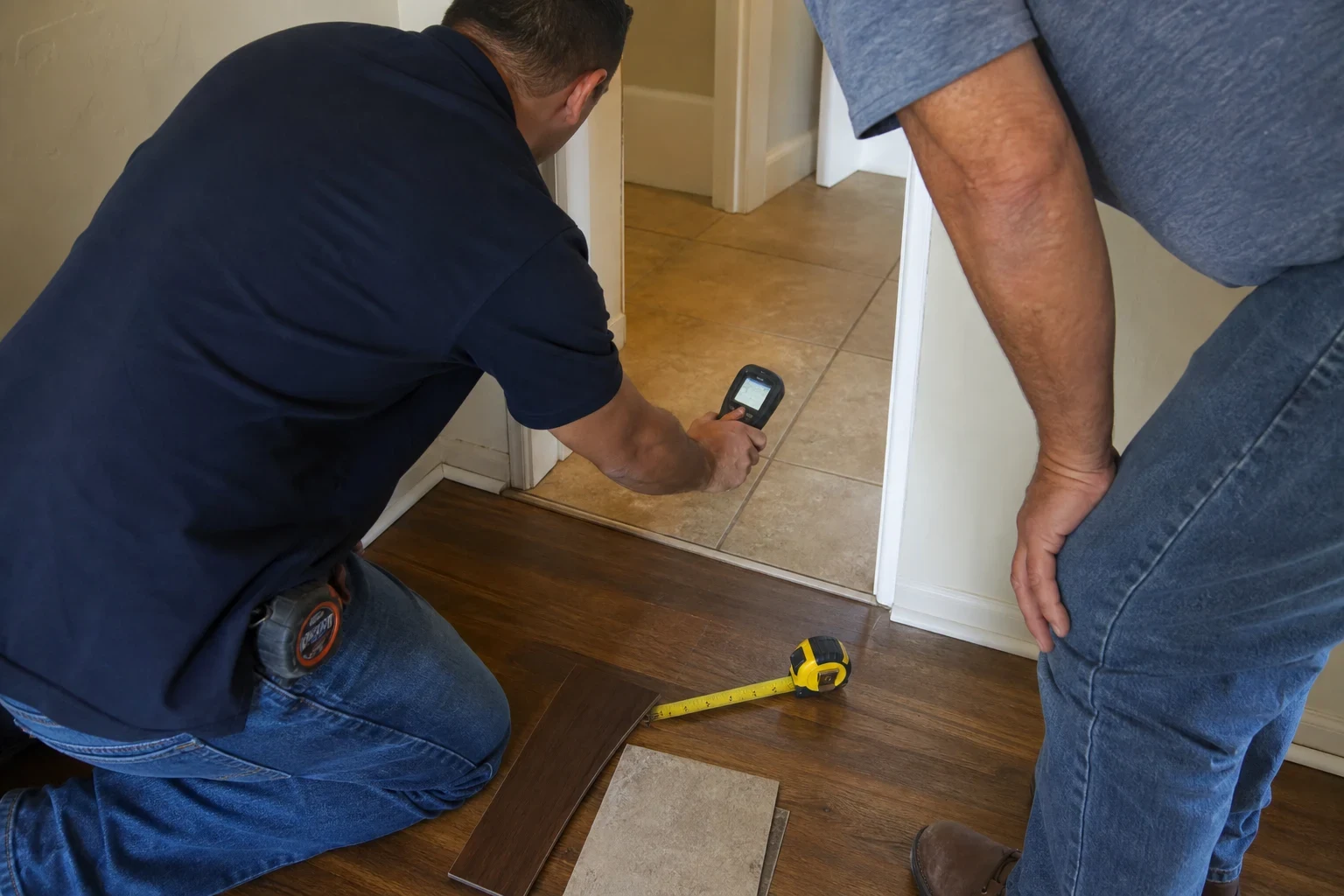
Measuring and testing in your home
We measure the rooms, take moisture readings, check flatness and look at doorways, stairs and transitions. Then we talk through species, finish and plank width with what we found in mind.
- 3
Delivery and acclimation
The hardwood arrives and sits in the rooms where it will be installed. We meter it again before work begins.
- 4
Installation days
We clear and protect the work area, remove the old floor, prepare the subfloor and install the hardwood by nailing, gluing or floating, whichever the subfloor calls for. Most rooms are walkable soon after, with glue-down floors needing a short cure before heavy furniture returns.
- 5
Final walkthrough
We fit trim and transitions, clean up and walk the floor with you, pointing out how to care for the finish through the seasons.
What Shapes the Cost of a Hardwood Floor
Two hardwood floors of the same size can be priced quite differently. The wood is only part of it; the condition of the subfloor and the layout of the rooms move the number as much as the species does. After we measure and test, you get your quote by phone with each part explained.
- Solid versus engineered, and species
- Oak, hickory and maple differ in cost, and plank width and wear-layer thickness change the price of engineered products.
- Subfloor preparation
- A flat, dry slab needs little. Grinding high spots, pouring leveler or adding a moisture barrier adds time and material.
- Removing what is there now
- Carpet comes up quickly. Glued tile or old adhesive takes more labor to remove cleanly.
- Room layout and details
- Closets, angled walls, many doorways and diagonal patterns mean more cuts. Steps are quoted on their own, and our stair flooring page explains that work.
Hardwood Flooring Questions
- Can hardwood go over a concrete slab?
- Yes, in most cases. Engineered hardwood is usually the right choice on a slab because its layered core resists movement. We test the slab's moisture first and choose the adhesive or underlayment based on those readings.
- How long does the wood need to acclimate?
- Often a few days, but it depends on the product and the conditions in your home. We go by moisture readings, not a calendar, and start once the wood and subfloor are within the range the manufacturer specifies.
- Is hardwood a good idea in a kitchen?
- It can be, with a quality finish and prompt cleanup of spills. For bathrooms and laundry rooms we usually suggest tile flooring or luxury vinyl plank, since standing water is hard on any wood.
- Do I need to move out during installation?
- No. Most people stay home and simply avoid the rooms being worked on. We will ask you to clear small items and fragile pieces, and we talk through furniture moving when we visit.
- Why does my floor show small gaps in winter?
- Wood shrinks a little when indoor air dries out, then closes up again in humid months. That is normal movement. Gaps that stay wide year-round are a different matter, and worth having us look at.
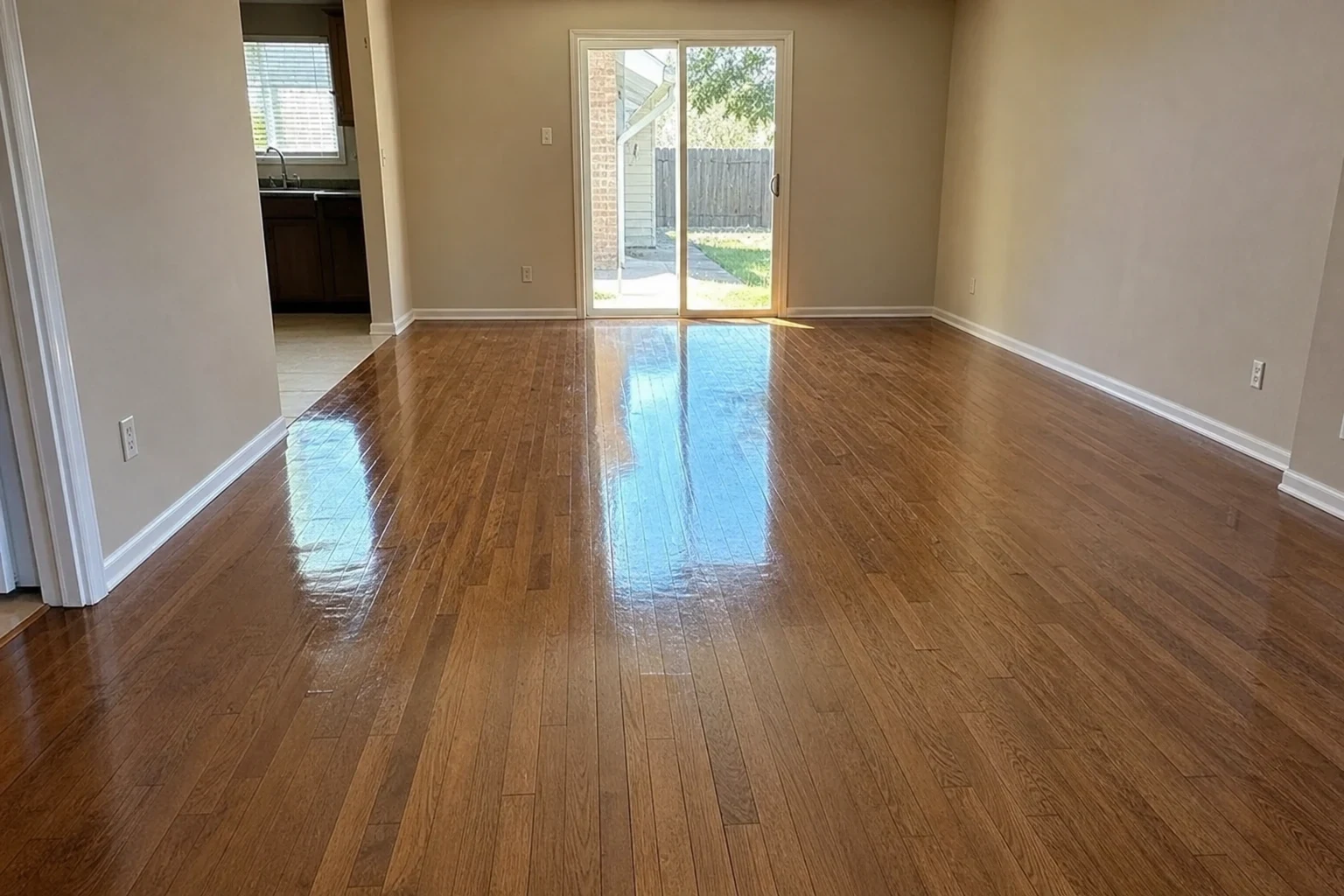
Start With a Look Underneath
Tell us about the rooms and the floor you have in mind. We will measure, test the subfloor and give you a clear recommendation before any wood is ordered.