ServicesLaminate Flooring
Laminate Flooring in Kemah
Laminate gives you the look of wood with a hard, scratch-resistant wear layer, at a gentler cost than hardwood. We check the floor underneath before anything goes down, because most laminate problems start there, not in the planks.
When Laminate Is the Right Floor
Laminate is a click-together plank built on a dense fiberboard core with a printed image and a clear wear layer on top. It stands up well to pets, chair legs and busy hallways, and the better products carry convincing texture and color variation from board to board.
It has one real weakness. The fiberboard core does not like standing water or a damp slab, and once an edge swells it does not shrink back. So we treat laminate as a good choice for bedrooms, living areas and hallways, and we talk honestly with you about kitchens, laundry rooms and full baths, where luxury vinyl plank or tile is often the better fit.
Before we recommend anything, we look at what the floor will sit on. A slab that releases moisture or dips in the middle will show up later as gaps, peaking joints or a hollow, clicking sound underfoot. Finding that first is how the new floor ends up right the first time.
What Our Laminate Installation Includes
Moisture testing on the slab
Most homes around here sit on concrete slabs, and the humid Gulf Coast air keeps them damp longer than people expect. We test the slab before choosing an underlayment, so the moisture barrier matches what we actually find.
Flatness check and floor prep
Laminate needs a flat surface to lock properly. We check with a long straightedge, then grind high spots and fill low ones with patching compound before the first row goes in.
Removal of the old floor
We take up existing carpet, pad, tack strip or old laminate, and haul it away. If tile has to come out, we tell you ahead of time what that involves.
Underlayment matched to the room
We use a vapor-barrier underlayment over concrete and choose one with sound dampening where you want a quieter floor. Some planks come with pad attached, and we do not double it up.
Expansion gaps, trim and transitions
Laminate moves with the seasons, so we leave the gap the manufacturer calls for at every wall and doorway. Baseboard or quarter round covers it, and we fit transitions where laminate meets tile or carpet.
Cleanup at the end of each day
We cut outdoors when we can, vacuum the work area and leave walkways clear so your home stays usable while we work.
Signs Your Floor Needs Attention
Swollen or peaked seams
Raised edges along the joints usually mean water got into the core. We look for where it came from, whether a leak, a damp slab or wet mopping, before replacing anything.
Gaps opening between planks
Separating boards often point to a floor that is not flat or a glued-down plank that was never meant to be. Fixing the cause matters more than swapping boards.
A hollow or clicking sound
If the floor flexes or clicks as you walk, there is usually a low spot underneath. New planks over the same dip will do the same thing.
Worn, stained or dated carpet
If your carpet is tired and you want something easier to keep clean, laminate is a sensible upgrade for bedrooms and living spaces.
Floor pinned at the walls
Buckling near cabinets or doorways often means the floor was installed tight with no room to expand. We can usually tell at a glance.
How a Laminate Job Runs
- 1
A conversation by phone
You tell us about the rooms, the current floor and anything that has gone wrong. We ask a few questions and set a time to come out and measure.
- 2
Measure and diagnose
At your home we measure each room, test the slab for moisture and check flatness. We show you what we find and explain whether laminate suits each space, then give you a written estimate.
- 3
Acclimate the planks
The laminate is delivered and left in your home, boxes flat, for the time the manufacturer specifies. That lets it adjust to your indoor air before it is cut.
- 4
Prep and install
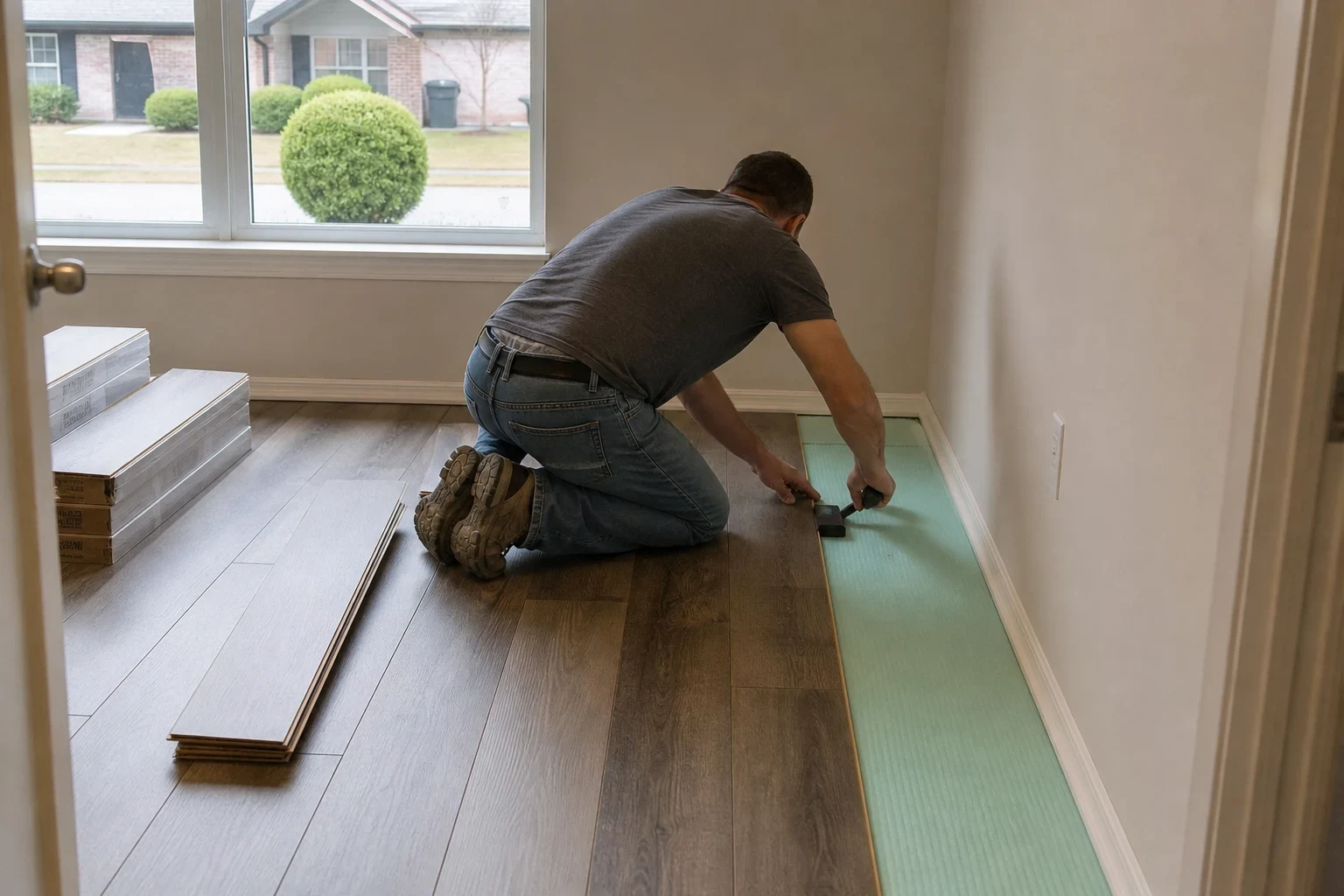
We remove the old floor, level the subfloor, roll out underlayment and lay the planks with staggered joints. Most single-level rooms are finished in a day or two, depending on prep.
- 5
Trim, walk-through and cleanup
We set baseboard or quarter round, fit transitions and clean up. Then we walk the floor with you and point out how to care for it.
What Moves the Cost of Laminate
Square footage is only part of the price. The condition of what sits underneath often matters just as much, which is why we measure and test before we put numbers in writing. Your estimate lists each part of the job separately.
- Subfloor condition
- A flat, dry slab needs little prep. Grinding ridges, filling dips or dealing with moisture adds labor and material.
- The floor coming out
- Pulling carpet is quick. Removing glued tile or old adhesive takes more time and disposal.
- Plank thickness and wear rating
- Thicker planks with a higher wear rating and attached pad cost more but feel more solid and hold up better in busy rooms.
- Layout and room shape
- Open rectangles go fast. Closets, angled walls, door jambs and many transitions mean more cuts and more trim work, and stairs are priced separately through our stair flooring work.
Laminate Flooring Questions
Something not covered here? (346) 220-0973
Can laminate go in a kitchen or bathroom?
Some water-resistant laminates handle a kitchen well if spills are wiped up promptly. Full bathrooms and laundry rooms see more standing water than most laminate tolerates. In those rooms we usually suggest luxury vinyl plank or tile, and we will explain why for your specific space.
Can you install laminate over my existing floor?
Sometimes. Laminate can float over sound, flat vinyl or tile, but not over carpet. We check whether the old floor is flat and firmly stuck down before deciding, because anything loose underneath will telegraph through.
Why do the planks have to sit in my home first?
Laminate expands and contracts with humidity. Letting it acclimate to your indoor air before installation reduces gapping and buckling later, especially in a humid climate.
How is laminate different from luxury vinyl plank?
Laminate has a fiberboard core and a harder surface that resists scratches well. Luxury vinyl plank is plastic all the way through, so it handles water better but can dent more easily. We help you weigh the two room by room.
How should I clean a laminate floor?
Sweep or vacuum regularly and use a damp, well-wrung mop, never a soaking one. Avoid steam mops and wax products, and put felt pads under furniture legs.
Start With a Look at What Is Underneath
Tell us about your rooms and what you have noticed with your current floor. We will set a time to measure, test the subfloor and talk through whether laminate is the right choice for your home.