ServicesVinyl Composition Tile
Vinyl Composition Tile Installation in Kemah
Vinyl composition tile is the tough, low-cost floor you see in schools and shops, and it works just as well in a laundry room or workshop at home. We check the slab under it first, so the tiles stay flat and the adhesive holds.
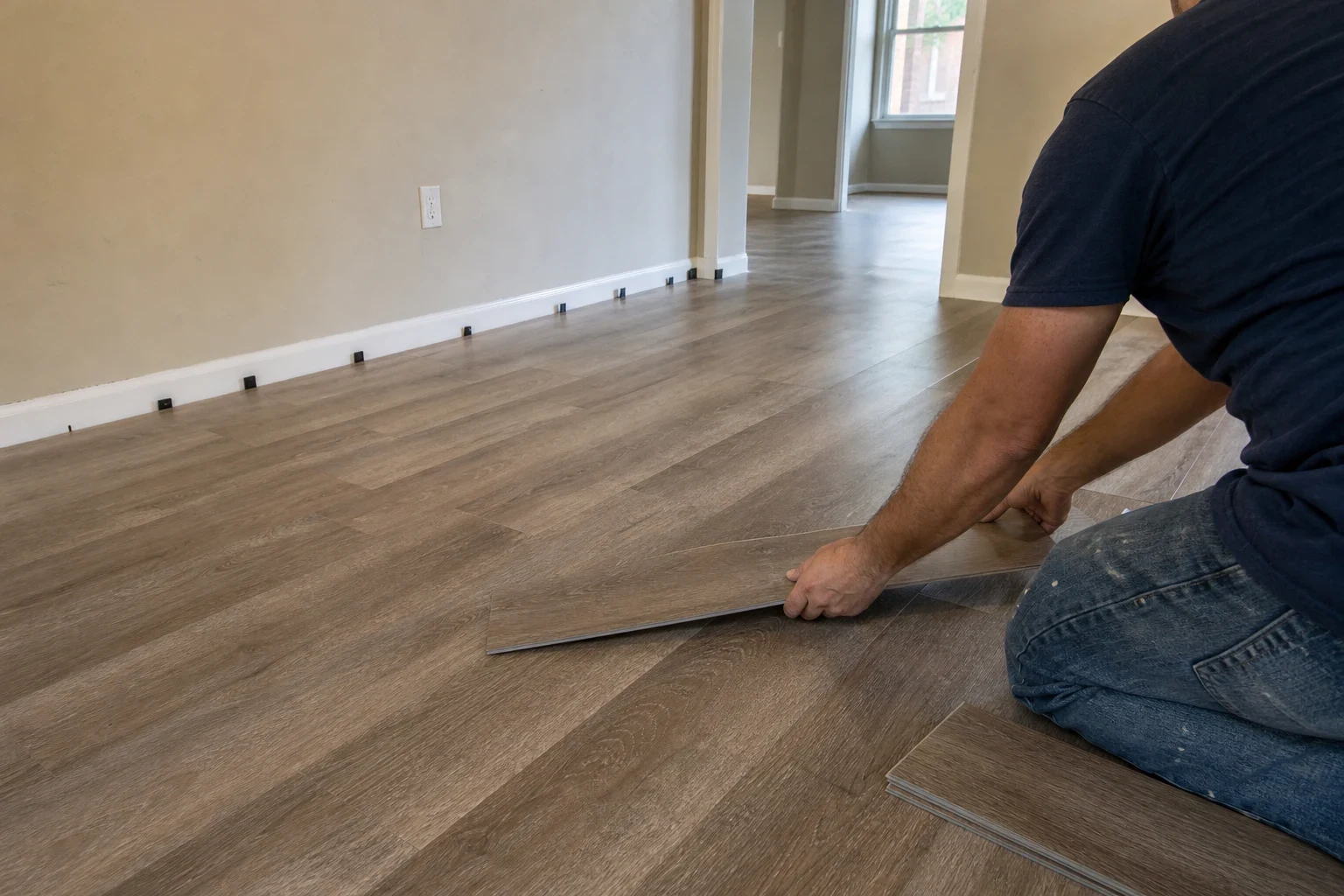
A Practical Floor That Depends on What Is Under It
VCT is made mostly of limestone filler held together with vinyl resin, pressed into thin 12-inch squares. It is dense, inexpensive to replace one tile at a time, and comes in solid colors and speckled patterns that let you lay checkerboards, borders or a single calm field of color. Many homeowners choose it for utility rooms, garage conversions, hobby spaces and retro kitchens.
Because each tile is only about an eighth of an inch thick, it shows everything beneath it. A ridge in the slab, a patch of old adhesive or a damp spot will appear on the surface within months. That is why we start every VCT job by finding out what the floor underneath is actually doing, and why we will tell you plainly if another material, such as luxury vinyl tile, suits the room better.
What Our VCT Work Includes
- Moisture testing of the slab
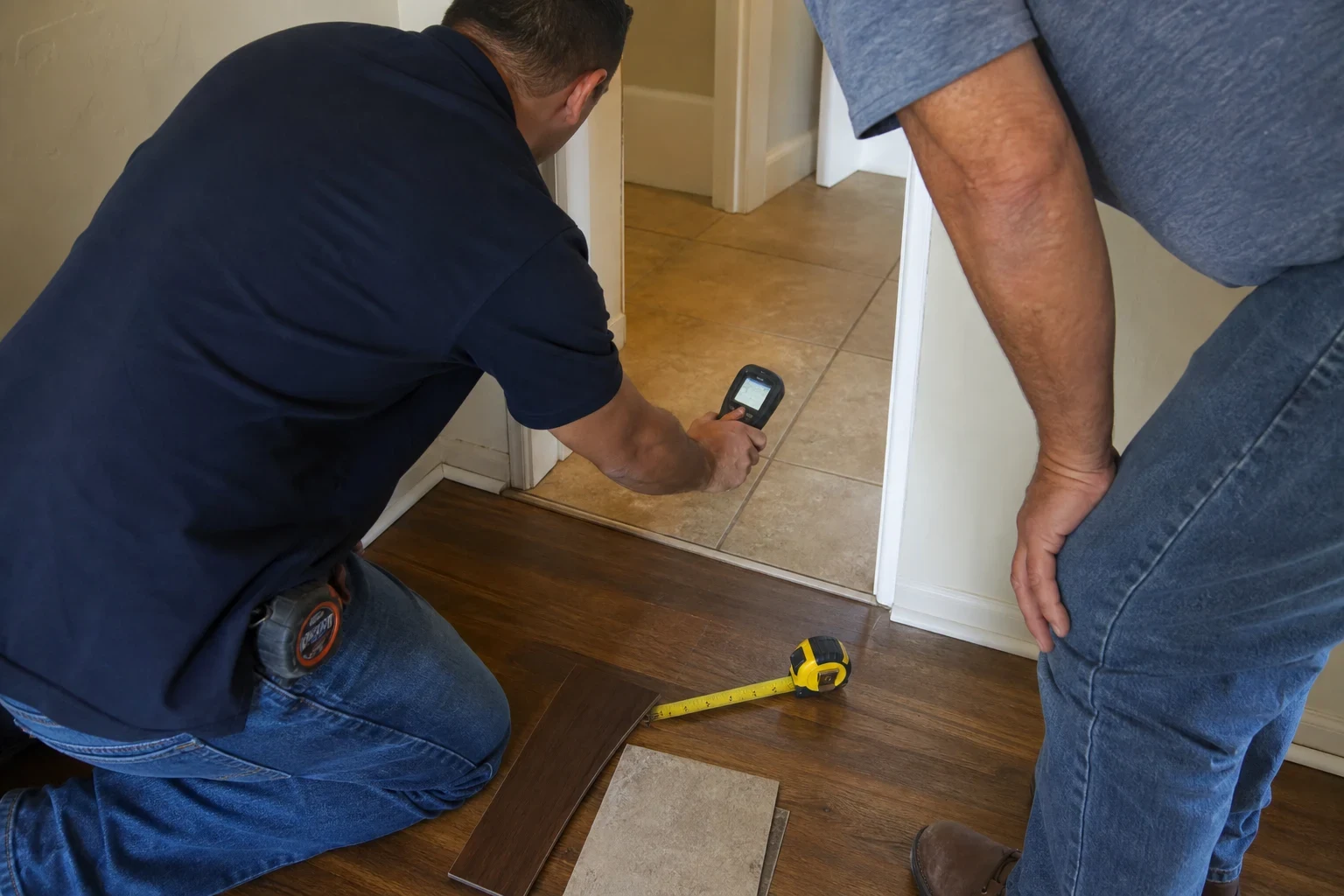
- Most homes here sit on concrete slabs, and Gulf Coast humidity keeps them damp longer than people expect. We test before we glue anything down, because excess moisture breaks down VCT adhesive and pushes tiles up at the seams.
- Removing the old floor with care
- We pull up existing vinyl, carpet or tile and scrape off old adhesive. If your home has older 9-inch tiles or black mastic, we stop and recommend testing for asbestos before anyone disturbs them.
- Patching and leveling
- Cracks, low spots and old fastener holes get filled with a cement-based patch and smoothed flat. This step takes the most patience and does the most to make the finished floor look right.
- Layout and pattern planning
- We find the center of the room and plan the rows so cut tiles at the walls are even, not a thin sliver on one side. Checkerboards and borders get dry-laid first so you can see them before they are set.
- Setting and rolling the tile
- Tiles go into clear thin-spread adhesive at the right open time, then we roll the floor with a heavy roller so every square makes full contact with the adhesive. Transitions and base trim finish the edges.
Signs Your VCT Floor Needs Attention
Corners curling up
Lifting corners usually point to moisture rising through the slab or adhesive that never took hold. Gluing them back down without finding the cause only buys a few weeks.
Black adhesive seeping at the seams
Dark lines oozing between tiles often mean the adhesive has been softened by water. We trace where it is coming from before we suggest anything.
Cracked or broken squares
A tile that cracks under normal foot traffic is often sitting over a hollow or a ridge. Replacing it without correcting the spot underneath leads to the same crack again.
Gaps opening between tiles
Seams that widen over time can signal shrinkage or adhesive letting go across a whole area.
Cracks showing through the surface
Lines that mirror a crack in the concrete, called telegraphing, tell us the slab needs patching before new tile goes down.
What Shapes the Cost of a VCT Floor
VCT itself is one of the more affordable materials we install, so labor and preparation make up much of the price. We give you a line-by-line quote after we have seen the slab, because the condition underneath is the part nobody can guess by phone.
Condition of the slab
A clean, flat slab needs little work. Deep cracks, old adhesive and low spots add patching time and material.
What comes up first
Removing carpet is quick. Scraping old sheet vinyl or tile adhesive takes longer, and suspect older flooring may need testing before removal.
Pattern and color choices
A single color in a straight layout is simplest. Checkerboards, borders and multiple colors mean more planning and more cuts.
Room size and shape
Small rooms with many corners, closets and door jambs take more time per square foot than one open space.
How a VCT Job Runs
- 1
A conversation by phone
You tell us about the room, how it is used and what you are seeing. We ask about the floor that is there now and any history of water.
- 2
Looking at the floor in person
We measure, test the slab for moisture and check flatness with a straightedge. Then we explain what we found and what it means for the new floor.
- 3
Preparing the room
We move what is agreed, protect doorways and nearby flooring, remove the old surface and patch the slab. Patch material needs time to cure, so prep can take longer than laying the tile itself.
- 4
Setting, rolling and cleanup
Tile is set and rolled, trim is fitted and debris leaves with us. We walk the floor with you and explain how long to wait before heavy furniture goes back and what routine care the finish needs.
Questions About Vinyl Composition Tile
How is VCT different from luxury vinyl tile?
VCT is a thin, porous tile made mostly of limestone, and it needs a protective finish kept up over time. Luxury vinyl tile is thicker, has a factory wear layer and needs no polish. VCT costs less and is easy to patch one square at a time, while LVT is softer underfoot and lower maintenance.
Can VCT go in a bathroom or kitchen?
It can go in a kitchen, especially one with a retro look, provided spills are wiped up and the finish is maintained. For full bathrooms with regular standing water we usually suggest tile flooring or luxury vinyl tile, because water can work into VCT seams.
What upkeep does a VCT floor need?
VCT relies on a layer of floor finish for its shine and protection. Day to day, you sweep and damp-mop with a neutral cleaner. Over time that finish wears and needs renewing, and we explain the routine when the job is done.
How long before I can use the room?
You can usually walk on the floor the same day once it has been rolled. We ask you to wait before moving heavy appliances or furniture back, and we will give you a specific time based on the adhesive and the room.
Do you serve homes outside Kemah?
Yes. We install VCT in Kemah and nearby towns including League City, Seabrook and Dickinson. Give us a call and we will confirm your area.
Start With an Honest Look at Your Slab
Tell us about the room and what the current floor is doing. We will come look, test what is underneath and explain whether VCT is the right choice before any work begins.