ServicesTile Flooring
Tile Flooring in Kemah
Tile is only as steady as what sits beneath it. Before we set a single piece, we look at why the old floor cracked, sounded hollow or came loose. Then we lay porcelain or ceramic on a flat, sound base, with clean grout lines and careful edges.
Tile That Lasts Starts With the Right Answer
Most tile failures have nothing to do with the tile. A crack that runs across five pieces in a straight line usually follows a crack in the slab. A hollow knock often means the thinset never fully gripped the tile. If those causes stay hidden, new tile fails the same way, sometimes within a year or two.
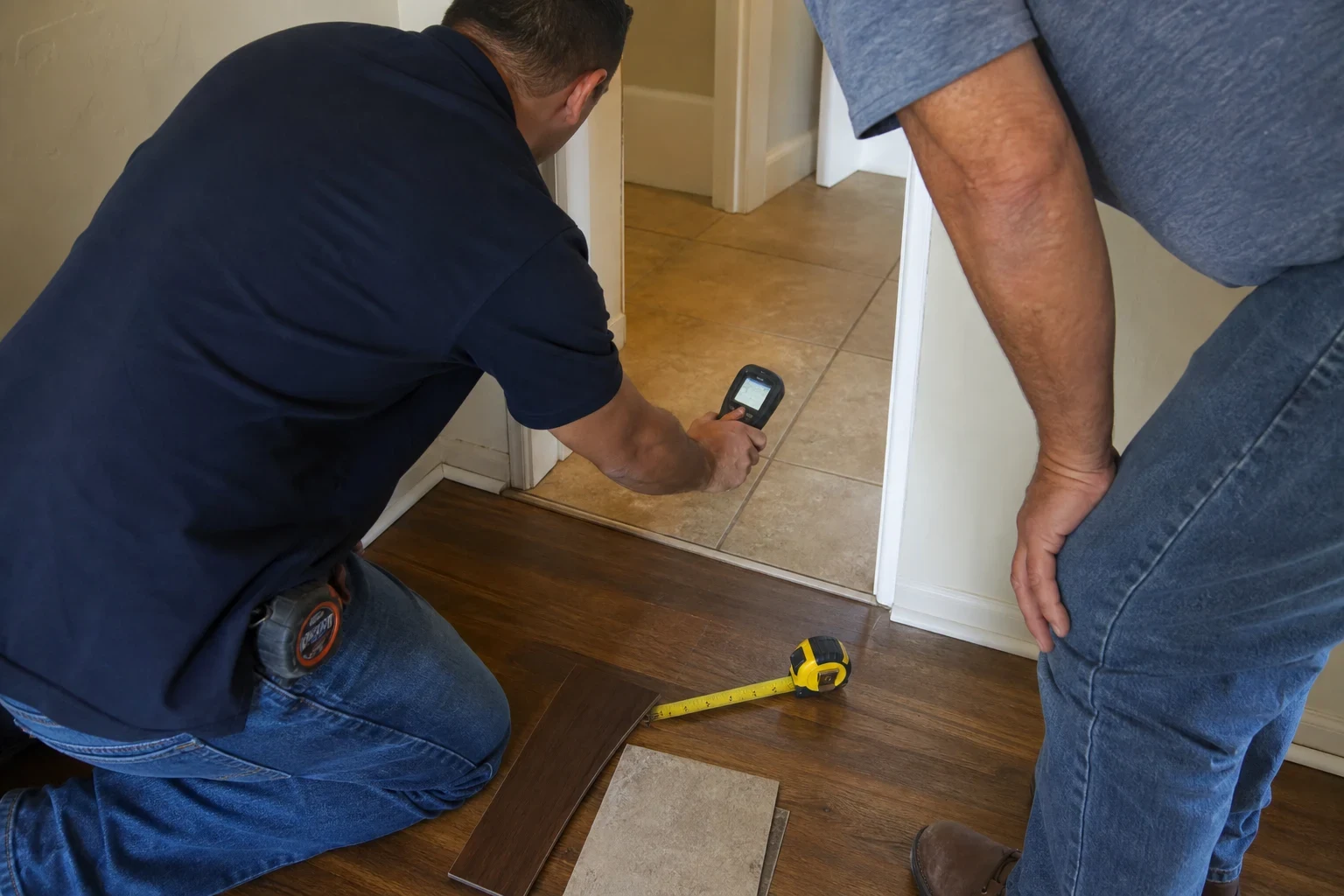
So our first visit is a careful look. We tap tiles, check the floor with a long straightedge and trace crack patterns back to their source. Then we explain what we found and what the new floor needs, so you know what you are paying for and why.
Tile is a good choice for kitchens, baths, entries and laundry rooms, and for anyone who wants a hard, water-resistant floor that holds up in the humid Gulf Coast air. If a softer or warmer surface suits a room better, we will say so and point you toward luxury vinyl tile or carpet instead.
What Our Tile Installation Includes
Slab and subfloor assessment
We check flatness, look for cracks and movement and note any moisture concerns. On a wood subfloor we check for bounce, because tile and grout crack where a floor flexes.
Removal and surface prep
We take up the old flooring, scrape away leftover adhesive or mortar and grind high spots. Low areas get a self-leveling compound so large tiles sit flat.
Crack isolation where it is needed
Over an active slab crack we install a crack isolation or uncoupling membrane. It lets the concrete move a little without that movement reaching your tile.
Layout planned before mixing
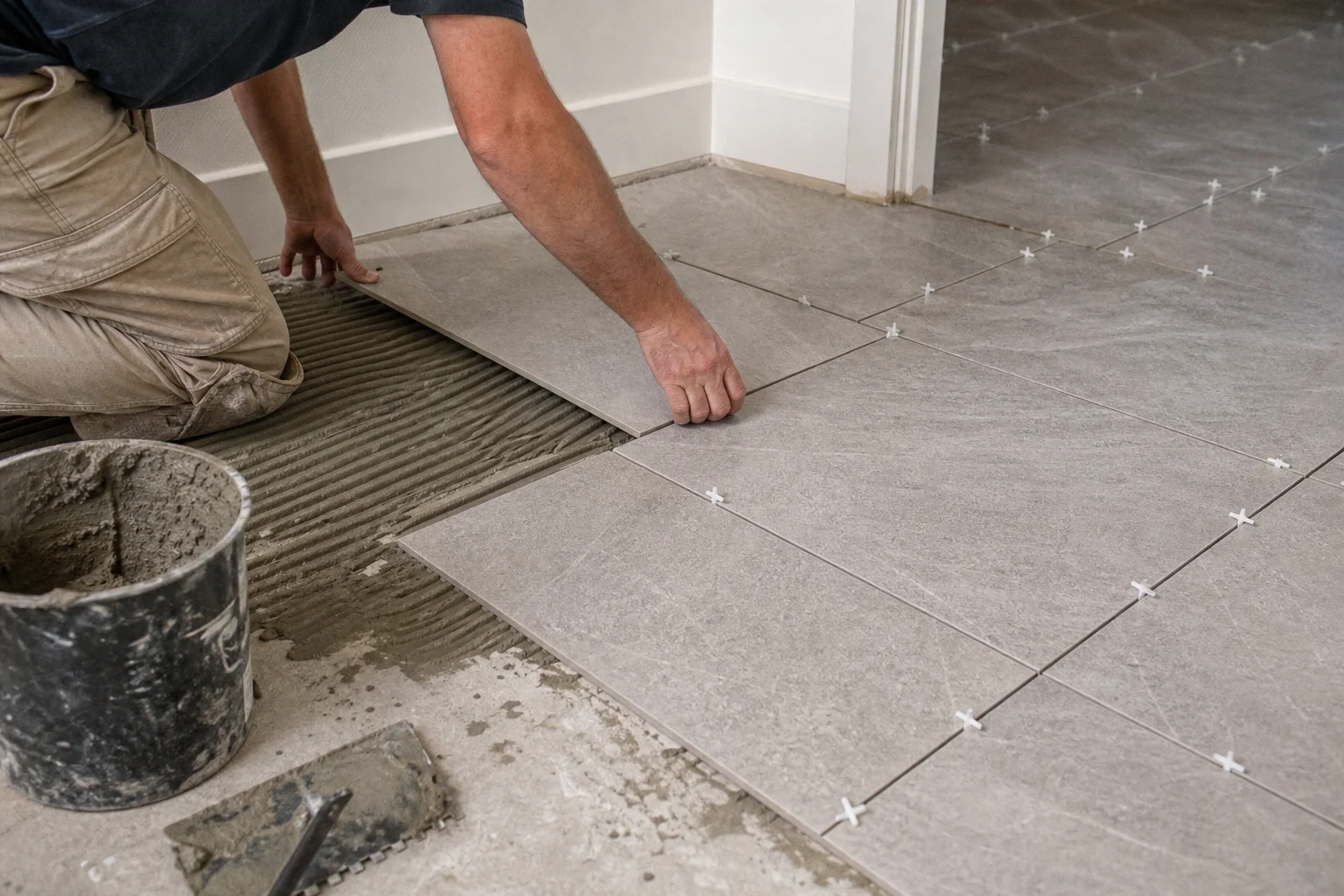
Before any thinset is mixed, we set tiles out loose across the floor to find the best starting line. That keeps narrow cut pieces away from doorways and squares the pattern to your cabinets and walls. You approve the layout before anything is set.
Full-coverage setting
Each tile is back-buttered and set in properly troweled thinset, so there are no hollow pockets underneath. We use leveling clips on large-format tile to keep edges even.
Grout, transitions and cleanup
We grout, clean the haze, fit thresholds where tile meets other floors and leave the room swept and ready.
Signs Your Tile Floor Needs Attention
- Cracks in a straight line
- Several tiles cracked along one line usually point to a slab crack below. Replacing only those tiles rarely holds.
- A hollow sound underfoot
- Tiles that sound drummy when tapped have lost their grip on the mortar or never had full coverage. They tend to crack next.
- Crumbling or missing grout
- Grout that keeps falling out often signals movement under the floor, not just old grout.
- Tiles lifting or tenting
- Tiles that pop up in a ridge are usually reacting to trapped moisture or a missing expansion gap at the walls. This needs a proper fix, not more adhesive.
- Uneven edges you can feel
- Raised tile edges catch toes and chair legs. They come from an unflat base or poor setting, and both can be corrected in a new install.
How a Tile Job Runs
- 1
Walk-through and diagnosis
We visit your home, look at the existing floor and find the cause of any damage. You hear plainly what we found.
- 2
Written estimate and tile choice
You get a line-item estimate covering removal, prep, materials and installation. We talk through tile size, finish and grout color with you.
- 3
Prep day
We protect nearby rooms, remove the old floor and correct the base. This is the dustiest part, and we contain it as well as we can.
- 4
Setting and grouting
Tile goes down to the planned layout. After the thinset cures, we grout and clean.
- 5
Final look together
We walk the floor with you, check transitions and explain how long to wait before heavy use and how to care for the grout.
What Shapes the Cost of a Tile Floor
The room and the condition of the floor underneath usually move a tile quote more than the tile itself. We price the job after seeing it in person, so the number matches the actual work. These are the main drivers.
- Size and shape of the space
- Square footage matters, but so do angles, closets and cabinet runs that add cuts.
- Tile material and format
- Porcelain, ceramic and natural stone set differently. Large-format and plank tile need a flatter base and more careful handling.
- Condition of the base
- Leveling, crack isolation or subfloor reinforcement add cost, and they are often what makes the new floor last.
- What comes out first
- Pulling up old tile set in a thick mortar bed takes more time than removing carpet or vinyl.
- Pattern and finishing details
- Herringbone, diagonal layouts, borders and decorative thresholds all take extra labor.
Tile Flooring Questions
- Why did my old tile crack, and will the new tile crack too?
- Most cracking comes from slab movement, a flexing subfloor or poor mortar coverage. We find which one it was before quoting. If the cause is addressed with leveling, a membrane or reinforcement, the new floor is far better protected.
- Can you lay new tile over my existing tile?
- Sometimes. The existing tile has to be firmly attached and flat, and the extra height must still clear doors, thresholds and appliances. In many homes the old tile turns out hollow or cracked, and covering it only buries the problem. We tap and check every area first and give you a straight answer on which route makes sense.
- Should I choose porcelain or ceramic?
- Porcelain is denser and absorbs very little water, so it suits baths, entries and high-traffic areas. Ceramic is lighter, easier to cut and works well in drier rooms with lighter use. We can show you how each behaves in your space.
- How soon can we walk on the new floor?
- Light foot traffic is usually fine about a day after grouting. We suggest waiting a few days before moving heavy furniture or appliances back, and we will give you timing for your specific materials.
- How disruptive is tile work inside my home?
- Removal and grinding are loud and can be dusty, so we seal off doorways and cover vents. Once the base is ready, setting and grouting are much quieter. We clean up at the end of each day.
Ready for a Tile Floor That Stays Put
Tell us about the room and what you have noticed about the current floor. We will set up a visit, find the cause and plan the install from there.