ServicesStair Flooring
Stair Flooring in Kemah, Fitted Tread by Tread
Stairs take more wear than any other floor in your home, and they hide their problems well. We look at each tread, riser and nosing before we recommend anything, then install hardwood, vinyl plank, laminate or carpet that sits tight, stays quiet and lines up with the floors around it.
What stair flooring involves
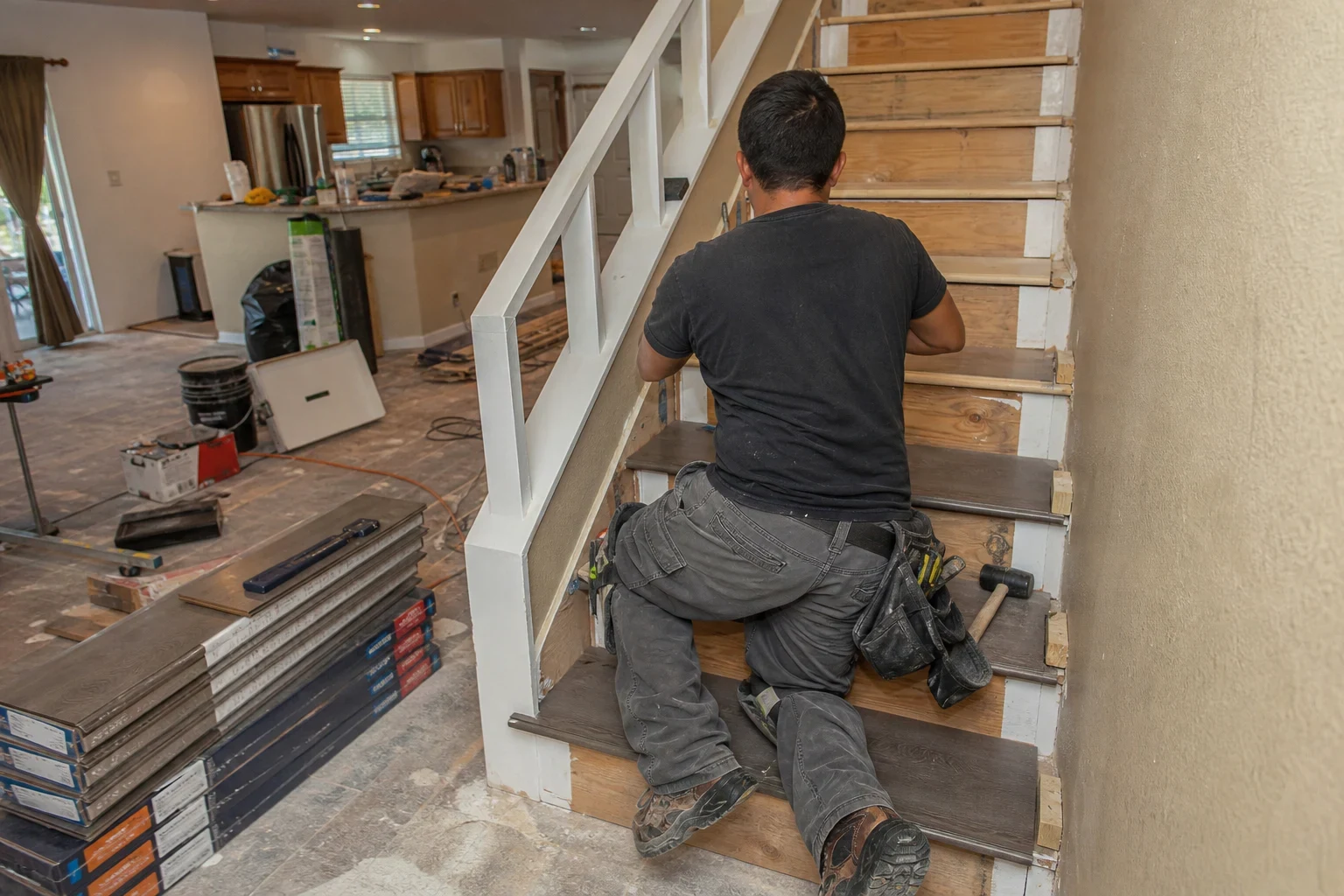
A staircase is a small floor with dozens of edges. Every step has a tread you walk on, a riser you kick, and a nosing that takes the heel of every foot coming down. Each one needs its own cut, its own fastening and its own finish detail, which is why stairs take longer per square foot than any room in the house.
Most of the trouble we see on stairs starts underneath the old covering. A squeak is usually a tread that has worked loose from the stringer, not a flaw in the carpet. A soft step can mean a split tread or a missing support block. We find which it is before new material goes on, because covering a loose tread only hides the noise for a few months.
When the structure is sound, we fit the new surface to match the floors at the top and bottom, so the staircase reads as part of the room rather than an afterthought.
What the work includes
- Step-by-step inspection
- Once the old covering is up, we check every tread for movement and every riser for gaps. We show you what we find before we go further.
- Securing loose treads
- Treads that rock or creak are fastened back to the stringers with screws and construction adhesive. This is the step that keeps a new stair quiet.
- Hardwood treads and risers
- Solid hardwood treads with a shaped nosing, paired with painted or matching wood risers. We pick species and stain to sit beside your Hardwood Flooring.
- Vinyl plank and laminate stairs
- Luxury Vinyl Plank and Laminate Flooring go on stairs with a matching stair nose piece glued and fastened at each edge, so the front of the step holds up to daily traffic.
- Carpet on stairs
- We install carpet either wrapped over the nosing or tucked under it, with pad cut to each tread so the edge stays crisp instead of rounding off over time.
- Landings and transitions
- Landings and the first and last steps are where stairs meet the rest of your home. We plan those joints so the heights and patterns line up cleanly.
Signs your stairs are ready for new flooring
Squeaks on certain steps
A step that creaks every time is moving against its fasteners. That movement wears the covering from below and gets louder over time.
Carpet worn at the nose
Stair carpet fails first at the front edge, where it bends and takes every footfall. Matted, shiny or thin nosing means the pad underneath is gone too.
Stairs that no longer match
New floors downstairs often leave the old staircase looking out of place. Matching the stairs ties the rooms back together.
Loose or chipped nosing
A nosing that shifts underfoot or has a broken edge is a slip and trip risk. It should be replaced, not glued back down and left.
Steps that feel soft
Flex in the middle of a tread can point to a cracked board or missing support. In our humid Gulf Coast air, older stair framing can also loosen as the wood swells and dries through the seasons.
What moves the cost of stair flooring
Stairs are priced by the step and by the detail, not just by square footage. Two staircases with the same number of steps can differ a lot once the shape and the condition underneath are known. We give you a written estimate after we have seen your stairs in person.
Number and shape of steps
A straight run is simplest. Winders, curved steps, open sides with exposed ends and landings all add cuts and labor.
Material choice
Solid hardwood treads cost more to supply and fit than carpet. Vinyl plank and laminate fall in between, with the matching stair nose a real part of the cost.
Condition underneath
Loose treads, split boards or old glue that has to come off all add prep time. We can only confirm this once the old covering is up.
Working around railings
Balusters and newel posts stay in place, so each tread is scribed around them. More posts and spindles mean more careful fitting.
How a stair job runs
- 1
Look and measure
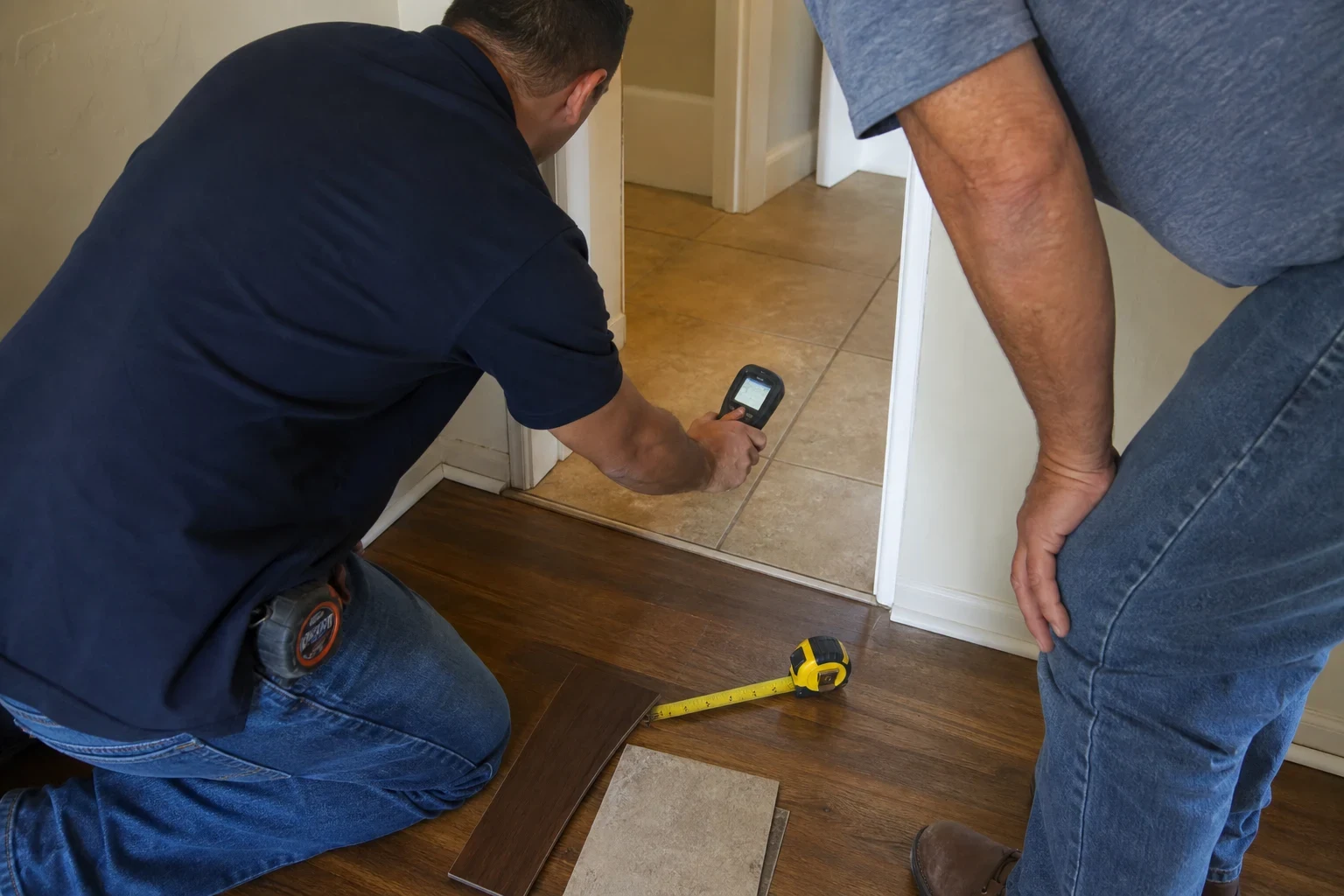
We visit your home, walk the stairs, count steps, note any winders, open sides or landings, and measure the height of each riser. You get a clear explanation of what we think is going on underneath.
- 2
Written plan
We write out the material, the nosing detail and the prep work we expect, so you know what you are agreeing to before anything is removed.
- 3
Strip and secure
We take up the old covering, pull tack strips and staples, and fasten any loose treads. If something underneath needs more attention than expected, we stop and show you.
- 4
Install and finish
Treads, risers and nosing are cut and fitted one step at a time. We protect the floors and walls around the staircase, then clean up and walk the finished stairs with you.
Stair flooring questions
Can vinyl plank go right over my carpeted stairs?
No. The carpet, pad and tack strips all come off first. Hard flooring needs a solid, flat tread to bond to, and leaving carpet underneath would make every step spongy and the nosing unsafe.
Will new flooring change the height of my steps?
It can. Adding a layer to every tread is even across the middle steps, but the top and bottom steps can end up taller or shorter than the rest. We measure riser heights before we start and plan the thickness so the steps stay consistent and comfortable to walk.
Can my stairs match the new floors in the rest of the house?
Usually, yes. Most hardwood, vinyl plank and laminate lines offer matching stair nosing, and we can stain hardwood treads to sit beside an existing floor. We bring samples so you can see the match on your own stairs.
Is carpet or hard flooring better on stairs?
Carpet is softer underfoot and quieter, which many families with small children or older relatives prefer. Hard surfaces clean easily and hold their look longer. Both are safe when the nosing is fitted correctly, so it comes down to how your household uses the stairs.
How long will we be without our stairs?
Most straight staircases are done within a day or two, depending on material and how much prep the treads need. Carpet usually lets you use the stairs the same evening. With glued hardwood or vinyl, we tell you when it is safe to walk on them and how to step in the meantime.
Start with a close look at your stairs
Tell us how many steps you have and what bothers you about them. We will set a time to see them in person and explain what we find before we suggest a material.