ServicesLuxury Vinyl Tile
Luxury Vinyl Tile in Kemah
Luxury vinyl tile gives you the look of stone or ceramic with a softer, warmer surface underfoot. Before we lay a single tile, we check the slab or subfloor for moisture and dips, because those are what open seams and lift edges later.
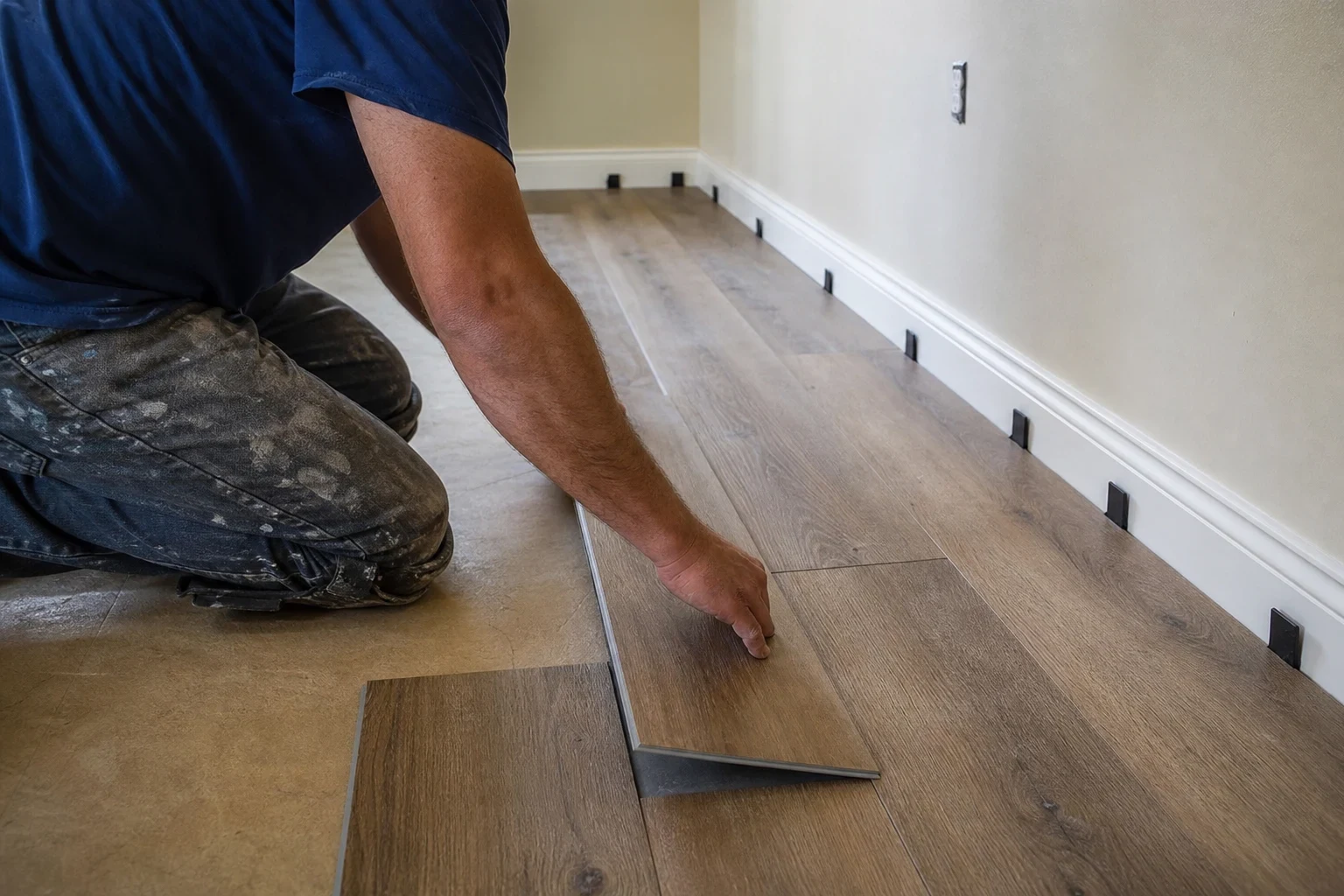
A tile look without the cold, hard surface
Luxury vinyl tile, often called LVT, comes in square and rectangular formats such as 12 by 24 or 18 by 18, printed and textured to read as slate, travertine, marble or porcelain. Some styles are made to be grouted, so the joints look like a true tile floor. It is quieter and warmer than ceramic, and the surface shrugs off spills, which makes it a good fit for kitchens, bathrooms, laundry rooms and entryways.
What decides how long it lasts is mostly underneath. Large tile formats show every high spot and hollow in a subfloor, and a slab that gives off moisture can loosen adhesive or trap dampness under a click-lock floor. Along the Gulf Coast, slabs and humid air make that check worth doing every time. So we start by finding out what your floor is sitting on, then choose the product and method that suit it.
What our luxury vinyl tile work includes
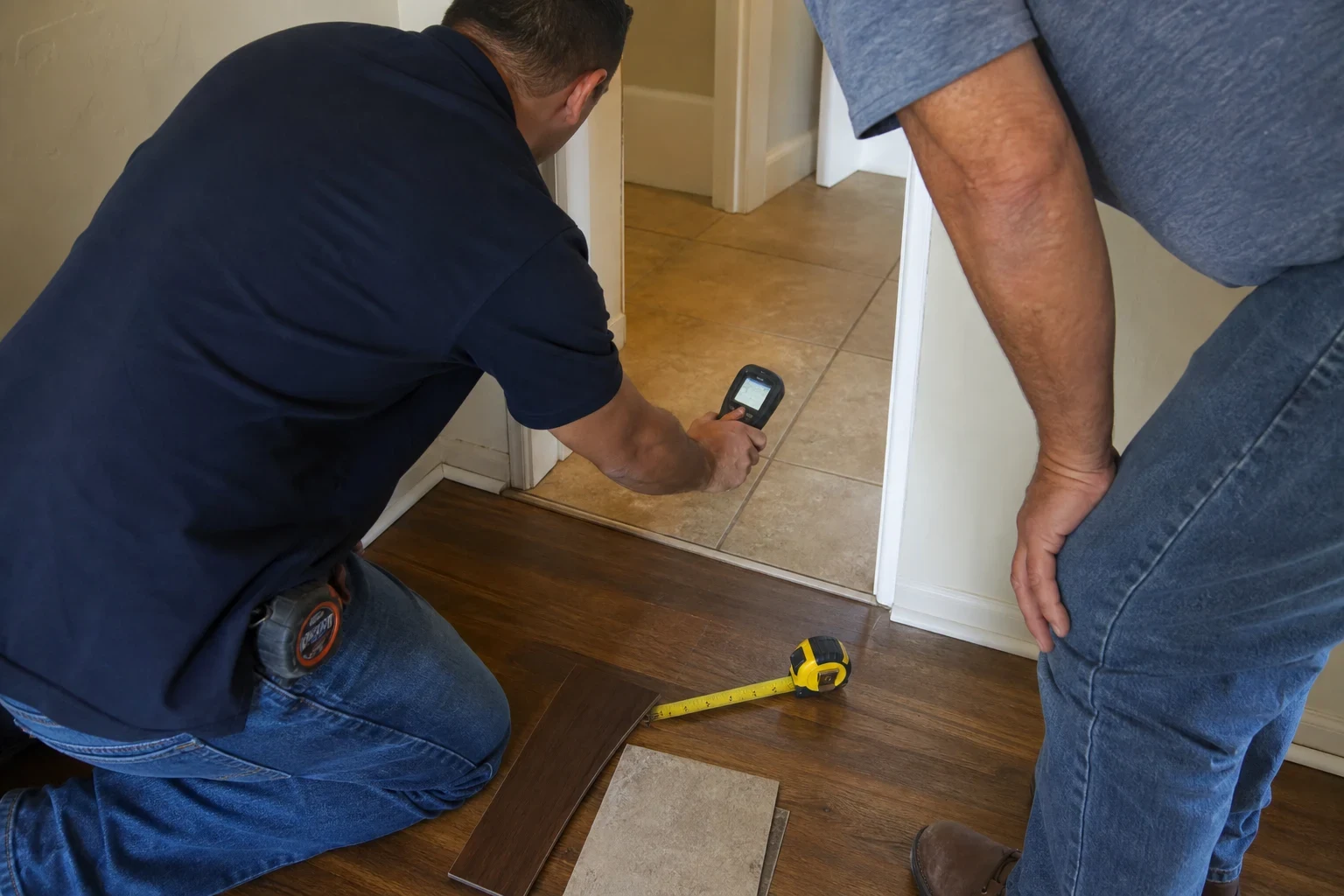
Moisture and flatness testing
We test the slab or wood subfloor for moisture and run a straightedge across the room to find dips and humps. You see the readings and the problem spots before anything is decided.
Removal of the old floor
We take up carpet, sheet vinyl or old tile and haul it away. If an older layer is sound and flat, we will tell you whether it can stay.
Subfloor preparation
High spots are ground down and low spots filled with patch or self-leveling compound, so large tiles sit flat without rocking at the corners.
Glue-down or rigid core install
We lay glue-down LVT with the right adhesive and trowel, or click together rigid core tile over a suitable underlayment. Expansion gaps are left at walls and fixed points so the floor can move with the seasons.
Layout and pattern planning
We center the layout so cut tiles at doorways and walls are not thin slivers, and we plan offset, straight or diagonal patterns before the first tile goes down.
Trim, transitions and cleanup
Door jambs are undercut, transitions are fitted to the next room, and baseboard or quarter round is reset. We vacuum and wipe the floor before we leave.
Signs it may be time for luxury vinyl tile
- Cracked or hollow ceramic tile
- Tiles that crack or sound hollow when tapped often point to movement or poor adhesion underneath. We find that cause first, then decide whether LVT can go over the top or the old tile has to come up.
- Old sheet vinyl lifting or yellowing
- Curling edges and discolored seams mean the adhesive has failed. LVT gives you a fresh, durable surface once the old layer is dealt with properly.
- A cold, hard floor in a busy room
- If stone or ceramic feels harsh in the kitchen, LVT keeps the look while being easier on feet and dropped dishes.
- Spills and damp rooms
- Bathrooms, laundry rooms and mudrooms need a surface that water will not soak into. LVT handles splashes well, though a leak should still be fixed at its source.
- Gaps or peaking in an existing vinyl floor
- Separating joints or tiles lifting at the middle usually come from moisture, missing expansion gaps or an uneven base. Replacing the floor without correcting that just repeats the failure, so we look for the reason first.
How an LVT job runs
- 1
Assessment by phone and in person
You tell us about the rooms and the look you want. At your home we measure, test moisture and check flatness, then explain what we found and which install method suits it.
- 2
Product and plan
We help you compare wear layers, glue-down and rigid core options, and tile sizes. Rigid core tiles usually rest in the room before install so they adjust to your home.
- 3
Prep day
We move furniture as agreed, remove the old floor, and level or patch the subfloor. Leveling compound needs time to cure, so larger prep may add a day.
- 4
Installation
Tiles go down from a centered layout, with cuts kept neat at walls and doorways. Grout is applied where the style calls for it.
- 5
Finish and walkthrough
We reset trim, fit transitions and clean up. Then we walk the floor with you and go over care, including which cleaners to avoid.
What shapes the price of luxury vinyl tile
Every quote is based on your rooms and what we find underneath, so we price after the assessment rather than before. The product is only part of it. Prep and layout often matter just as much.
- Square footage and room shape
- More area means more material and labor. Rooms with many corners, closets and doorways take extra cutting time.
- Subfloor condition
- A flat, dry slab costs little to prepare. Grinding, leveling or chipping up old ceramic tile that is stuck fast to the slab adds labor and materials.
- Product choice
- Thicker wear layers, rigid core construction and groutable styles cost more than thinner glue-down tiles.
- Pattern and tile size
- Diagonal and herringbone layouts produce more waste and take longer to set than a straight grid.
- Trim and transitions
- New baseboards, stair nosing or several transition strips between rooms add to the total.
Questions about luxury vinyl tile
- What is the difference between luxury vinyl tile and luxury vinyl plank?
- They are built from similar materials, but LVT comes in square or rectangular tile shapes made to look like stone or ceramic, while luxury vinyl plank is long and narrow to look like wood. Some LVT can be grouted. The choice is mostly about the look you want in each room.
- Can you put luxury vinyl tile over my existing tile?
- Sometimes. If the old tile is firmly attached and flat, and the grout lines are filled so they do not show through, it can stay. If tiles are loose, cracked or hollow, they need to come up first. We check before recommending either path.
- Is luxury vinyl tile waterproof?
- The tile itself resists water and spills wipe up easily. Water that gets underneath through gaps at walls or a plumbing leak can still cause problems with the subfloor. That is why we test moisture and seal the edges in wet rooms.
- Should I choose glue-down or click-lock LVT?
- Glue-down tile is thin, very stable and works well over a flat, dry slab. Rigid core click-lock is more forgiving of small subfloor flaws and goes in faster. Our moisture and flatness readings usually point clearly to one or the other.
- How long does installation take?
- A single room often takes a day once prep is done. Whole-floor jobs or rooms that need leveling compound can take longer because the compound must cure before tiles go down. We give you a timeline after the assessment.
Start with a look at what is underneath
Tell us about the rooms you want covered and the style you have in mind. We will arrange a visit to test the subfloor and explain the options that suit it, in Kemah or nearby in League City and Seabrook.