ServicesCarpet Tile
Carpet Tile Installation in Kemah
Carpet tile gives you soft footing with a practical twist: a stained or worn square lifts out and a spare goes in. We check the slab underneath before ordering anything, so the tiles stay flat, the seams stay closed and the floor wears evenly in your home.
When Carpet Tile Is the Right Floor
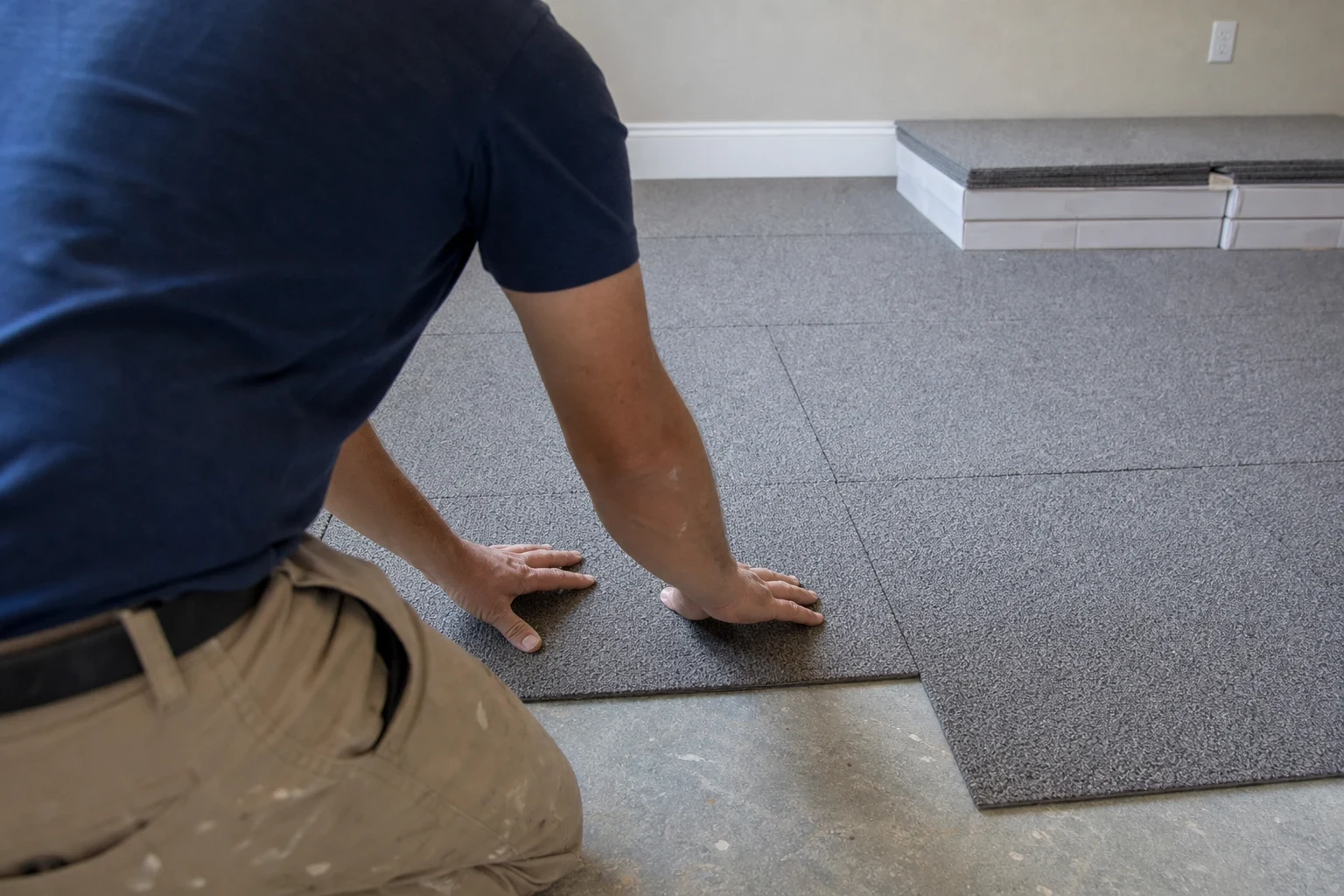
Carpet tile is broadloom carpet cut into squares or planks, each with its own stable backing. It suits rooms that see hard use and the occasional spill: a game room, a home office with a rolling chair, a kids' playroom, a bonus room over the garage. Because each piece is separate, you can lay a quarter-turn pattern, mix two colors, or keep a box of spares for the day a tile meets grape juice.
Most failures we see have little to do with the tile itself. Squares curl at the corners because moisture is rising through the slab, or gaps open because the wrong adhesive was used, or a ridge shows through because a crack was never filled. So our visit starts with the floor underneath. Once we know what it is doing, we pick the backing, the adhesive and the prep that fit it.
If you want an unbroken wall-to-wall look or deep plush pile, our carpet installation page may suit you better. Carpet tile shines where flexibility and easy repair matter more than wall-to-wall softness.
What the Work Includes
Slab moisture and flatness check
We test the concrete for moisture and run a straightedge across the room to find dips and humps. Those two readings decide most of what follows.
Removal of the old floor
We take up existing carpet, pad and tack strip, or old vinyl where needed, and scrape away leftover adhesive that would telegraph through new tile.
Subfloor prep
Cracks are filled, low spots are leveled with patch, and high spots are ground down. Carpet tile is thin enough that a small ridge underneath will show on the surface.
The right adhesive for your slab
Most carpet tile goes down with a pressure-sensitive release adhesive, which holds the tiles in place but lets single pieces lift out later. Where readings call for it, we use a product rated for higher slab moisture.
Layout and pattern
We start from the center of the room so cut tiles at the walls come out even, and we follow the arrows on the backing for the pattern you chose, whether monolithic, quarter-turn or ashlar.
Trim, transitions and cleanup
Edges meet hard floors with a proper transition strip, and we vacuum and haul away the old material before we leave.
Signs Your Room Needs Carpet Tile or a Fix
Corners curling up
Lifting corners on existing carpet tile usually point to slab moisture or a failed adhesive. We find out which before we relay anything.
Gaps opening between squares
Seams that drift apart can mean tiles were never acclimated or the adhesive dried out. Replacing tiles without solving that brings the gaps right back.
Stained patches you can't clean
If one corner of a playroom or office takes the abuse, carpet tile lets you swap a few squares instead of replacing the whole floor.
A musty smell from the floor
In a humid Gulf Coast climate, a damp slab under carpet can hold odor. We test for moisture first and tell you plainly if carpet of any kind is a poor match for that room.
Chair-worn broadloom
Rolling chairs flatten and fray wall-to-wall carpet quickly. A dense, low-pile carpet tile stands up to that traffic far better.
How a Carpet Tile Job Runs
- 1
In-home visit and readings
We measure the room, test the slab and look at what has gone wrong with the current floor. You get our findings and a written estimate that breaks out prep, material and labor.
- 2
Ordering and acclimation
Tiles come from the same dye lot so the color matches across the room. They sit in your home for a day or so to settle to indoor temperature before we lay them.
- 3
Tear-out and prep
We protect doorways and nearby floors, remove the old material and correct the slab. On some jobs patch needs time to cure, and we will tell you that up front.
- 4
Laying the tile
Adhesive is rolled out and left to tack, then tiles go down from the center line outward. Most single rooms are finished in a day.
- 5
Walkthrough
We walk the room with you, check seams and edges, and leave the extra tiles labeled so future replacements match.
What Moves the Cost of Carpet Tile
Carpet tile pricing depends far more on the room and the slab than on a single number per square foot. We give you a written estimate after we have seen the floor, so you know what each line covers before work starts.
- The tile you choose
- Pile height, fiber, backing type and brand all change the material cost. Thicker cushion-backed tiles cost more than standard hard-backed squares.
- Condition of the slab
- A flat, dry slab needs little prep. Cracks, dips or high moisture readings add patching, leveling or a moisture-rated adhesive.
- What comes up first
- Removing old carpet is quick. Scraping glued-down vinyl or old adhesive takes longer and adds labor.
- Room shape and pattern
- Closets, angled walls and built-ins mean more cuts. Patterned or two-color layouts take more planning and some extra material.
Carpet Tile Questions
Something not covered here? (346) 220-0973
Can I really replace just one tile later?
Yes. With a release adhesive, a damaged square lifts out and a spare presses into place. That is why we leave labeled extras from the same dye lot. Tiles bought years later may not match exactly.
Is carpet tile a good choice over a concrete slab here?
It can be, if the slab moisture is in range. Our homes sit on slabs in a humid climate, so we test before recommending anything. If readings are high, we will suggest a moisture-rated adhesive or point you toward luxury vinyl tile instead.
Will it feel as soft as regular carpet?
Standard carpet tile is firmer than carpet over pad. Cushion-backed tiles close much of that gap, and we can bring samples so you can feel the difference underfoot.
Do you install carpet tile in bedrooms and living areas?
We do. It has moved well beyond offices, and many patterns now look residential. It is especially practical in kids' rooms and media rooms where spills happen.
How long before we can use the room?
You can walk on the floor and move furniture back as soon as we finish. If the slab needed leveling, that patch may need a cure period first, which we include in the schedule we give you.
Start With a Look at Your Slab
Tell us about the room and what the current floor is doing. We will come out, take readings and explain what the space needs before you choose a tile.